×
Il semble que vous utilisiez une version obsolète de internet explorer. Internet explorer n'est plus supporté par Microsoft depuis fin 2015. Nous vous invitons à utiliser un navigateur plus récent tel que Firefox, Google Chrome ou Microsoft Edge.
My Player placeholder

Devenez membre d'Incathlab et bénéficiez d'un accès complet !

Vous devez être membre pour accéder aux vidéos Incathlab sans limitation. Inscrivez vous gratuitement en moins d'une minute et accédez à tous les services Incathlab ! Vous avez aussi la possibilité de vous connecter directement avec votre compte facebook ou twitter en cliquant sur login en haut à droite du site.
Inscription Connexion
Inscription Connexion
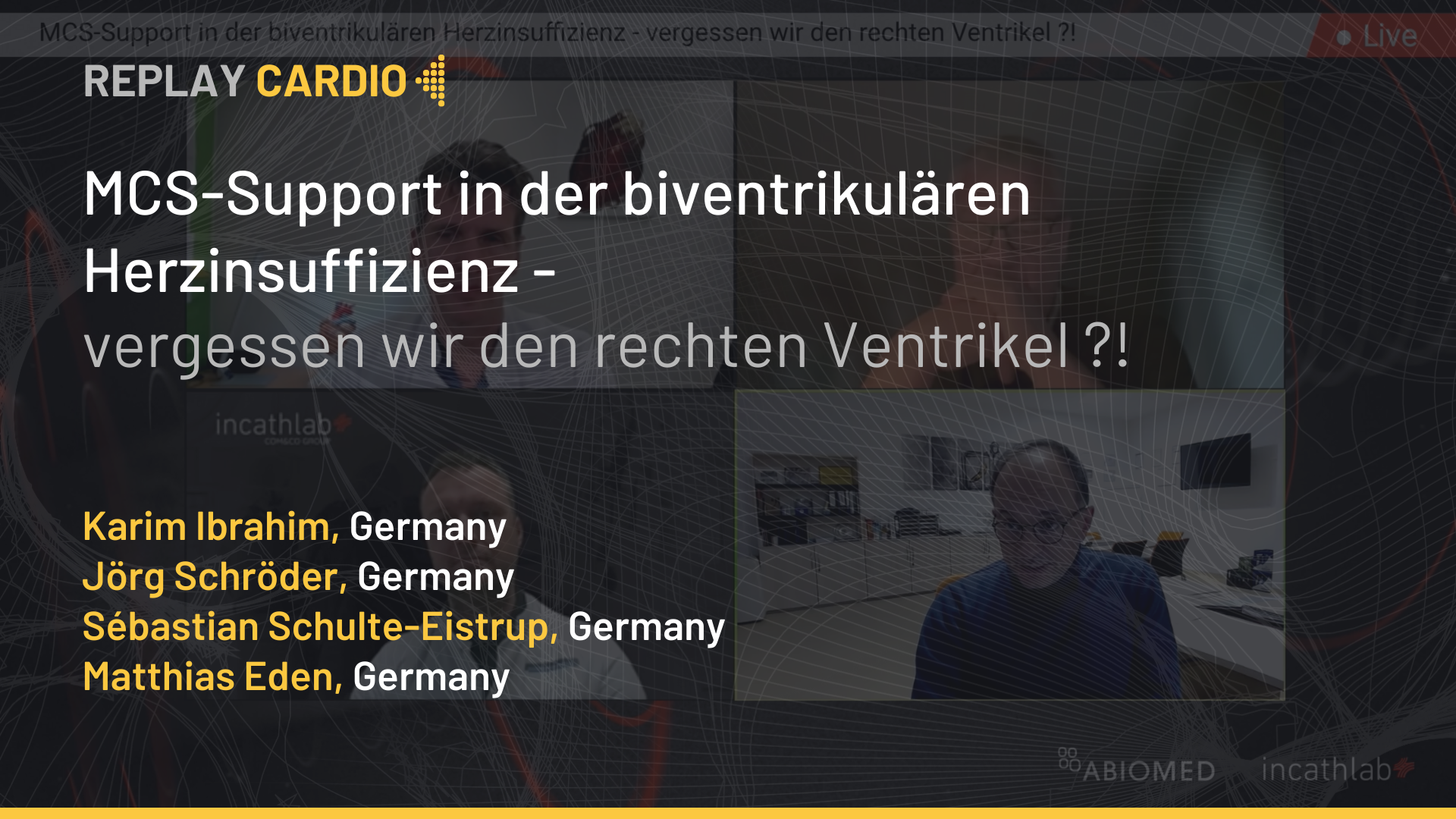
Chair
Prof. Karim Ibrahim, Klinikum Chemnitz
Referenten
Dr. Matthias Eden, Universitäsklinikum Heidelberg
PD Dr. Jörg W. Schröder, RWTH Uniklinik Aachen
Dr. Sebastian Schulte Eistrup, Kirchlengern
Agenda
|
18:00
|
Begrüßung und Einleitung
Prof. Karim Ibrahim
|
| 18:05 |
Rechtsherzunterstützung in der Biventrikulären
Herzinsuffizienz, Theorie/Pathophysiologie Dr. Matthias Eden |
| 18:25 |
Q&A |
| 18:30 |
Wie kann Impella 5.5 rechtsventrikulär unterstützen? Hämodynamik und Problematik des kleinen Kreislaufes Dr. Sebastian Schulte Eistrup |
| 18:50 |
Q&A |
| 18:55 |
BiPella / ECpella im klinischen Einsatz, Fallbeipiel, Erfahrungen PD Dr. Jörg W. Schröder |
| 19:15 |
Q&A |
| 19:25 |
Zusammenfassung Prof. Karim Ibrahim |
Zielgruppe
Dieses Webinar richtet sich an interventionelle Kardiologen, Herzchirurgen und Intensivmediziner. Das Ziel ist die Diskussion um Umgang mit Impella, Erfahrungsaustausch sowie Best Practice in den Strategien und Management von Patienten mit Mechanischer Kreislaufunterstützung.
Date du tournage : 28/02/2023
Dernière mise à jour : 02/03/2023
Dernière mise à jour : 02/03/2023

Suggestions
Vendredi 28 mars 2025 de 08h à 22h (GMT+1)
Honolulu : Jeudi 27 mars 2025 de 20h à 10h (GMT+1)
San Francisco : Jeudi 27 mars 2025 de 22h à 12h (GMT+1)
New York : Vendredi 28 mars 2025 de 01h à 15h (GMT+1)
Buenos Aires : Vendredi 28 mars 2025 de 03h à 17h (GMT+1)
London / Dublin : Vendredi 28 mars 2025 de 06h à 20h (GMT+1)
Paris / Berlin : Vendredi 28 mars 2025 de 07h à 21h (GMT+1)
Istanbul : Vendredi 28 mars 2025 de 08h à 22h (GMT+1)
Moscou / Dubaï : Vendredi 28 mars 2025 de 10h à 00h (GMT+1)
Bangkok : Vendredi 28 mars 2025 de 13h à 03h (GMT+1)
Shanghai : Vendredi 28 mars 2025 de 14h à 04h (GMT+1)
Tokyo : Vendredi 28 mars 2025 de 15h à 05h (GMT+1)
Sydney : Vendredi 28 mars 2025 de 16h à 06h (GMT+1)
Wellington : Vendredi 28 mars 2025 de 18h à 08h (GMT+1)
San Francisco : Jeudi 27 mars 2025 de 22h à 12h (GMT+1)
New York : Vendredi 28 mars 2025 de 01h à 15h (GMT+1)
Buenos Aires : Vendredi 28 mars 2025 de 03h à 17h (GMT+1)
London / Dublin : Vendredi 28 mars 2025 de 06h à 20h (GMT+1)
Paris / Berlin : Vendredi 28 mars 2025 de 07h à 21h (GMT+1)
Istanbul : Vendredi 28 mars 2025 de 08h à 22h (GMT+1)
Moscou / Dubaï : Vendredi 28 mars 2025 de 10h à 00h (GMT+1)
Bangkok : Vendredi 28 mars 2025 de 13h à 03h (GMT+1)
Shanghai : Vendredi 28 mars 2025 de 14h à 04h (GMT+1)
Tokyo : Vendredi 28 mars 2025 de 15h à 05h (GMT+1)
Sydney : Vendredi 28 mars 2025 de 16h à 06h (GMT+1)
Wellington : Vendredi 28 mars 2025 de 18h à 08h (GMT+1)
Complex & High-Risk Indicated Procedures
Discover the 6th edition - Day #1
Partager

Lundi 10 juin 2024 de 17h à 18h (GMT+2)
Honolulu : Lundi 10 juin 2024 de 05h à 06h (GMT+2)
San Francisco : Lundi 10 juin 2024 de 08h à 09h (GMT+2)
New York : Lundi 10 juin 2024 de 11h à 12h (GMT+2)
Buenos Aires : Lundi 10 juin 2024 de 12h à 13h (GMT+2)
Reykjavik : Lundi 10 juin 2024 de 15h à 16h (GMT+2)
London / Dublin : Lundi 10 juin 2024 de 16h à 17h (GMT+2)
Paris / Berlin : Lundi 10 juin 2024 de 17h à 18h (GMT+2)
Istanbul : Lundi 10 juin 2024 de 18h à 19h (GMT+2)
Moscou / Dubaï : Lundi 10 juin 2024 de 19h à 20h (GMT+2)
Bangkok : Lundi 10 juin 2024 de 22h à 23h (GMT+2)
Shanghai : Lundi 10 juin 2024 de 23h à 00h (GMT+2)
Tokyo : Mardi 11 juin 2024 de 00h à 01h (GMT+2)
Sydney : Mardi 11 juin 2024 de 02h à 03h (GMT+2)
Wellington : Mardi 11 juin 2024 de 04h à 05h (GMT+2)
San Francisco : Lundi 10 juin 2024 de 08h à 09h (GMT+2)
New York : Lundi 10 juin 2024 de 11h à 12h (GMT+2)
Buenos Aires : Lundi 10 juin 2024 de 12h à 13h (GMT+2)
Reykjavik : Lundi 10 juin 2024 de 15h à 16h (GMT+2)
London / Dublin : Lundi 10 juin 2024 de 16h à 17h (GMT+2)
Paris / Berlin : Lundi 10 juin 2024 de 17h à 18h (GMT+2)
Istanbul : Lundi 10 juin 2024 de 18h à 19h (GMT+2)
Moscou / Dubaï : Lundi 10 juin 2024 de 19h à 20h (GMT+2)
Bangkok : Lundi 10 juin 2024 de 22h à 23h (GMT+2)
Shanghai : Lundi 10 juin 2024 de 23h à 00h (GMT+2)
Tokyo : Mardi 11 juin 2024 de 00h à 01h (GMT+2)
Sydney : Mardi 11 juin 2024 de 02h à 03h (GMT+2)
Wellington : Mardi 11 juin 2024 de 04h à 05h (GMT+2)
L’OCT dans la resténose et thrombose de stent – il est temps d’allumer la lumière !
L’imagerie : un outil indispensable pour gérer les complications post-angioplastie
Partager
Mercredi 22 mai 2024 de 15h à 16h (GMT+2)
Honolulu : Mercredi 22 mai 2024 de 03h à 04h (GMT+2)
San Francisco : Mercredi 22 mai 2024 de 06h à 07h (GMT+2)
New York : Mercredi 22 mai 2024 de 09h à 10h (GMT+2)
Buenos Aires : Mercredi 22 mai 2024 de 10h à 11h (GMT+2)
Reykjavik : Mercredi 22 mai 2024 de 13h à 14h (GMT+2)
London / Dublin : Mercredi 22 mai 2024 de 14h à 15h (GMT+2)
Paris / Berlin : Mercredi 22 mai 2024 de 15h à 16h (GMT+2)
Istanbul : Mercredi 22 mai 2024 de 16h à 17h (GMT+2)
Moscou / Dubaï : Mercredi 22 mai 2024 de 17h à 18h (GMT+2)
Bangkok : Mercredi 22 mai 2024 de 20h à 21h (GMT+2)
Shanghai : Mercredi 22 mai 2024 de 21h à 22h (GMT+2)
Tokyo : Mercredi 22 mai 2024 de 22h à 23h (GMT+2)
Sydney : Jeudi 23 mai 2024 de 00h à 01h (GMT+2)
Wellington : Jeudi 23 mai 2024 de 02h à 03h (GMT+2)
San Francisco : Mercredi 22 mai 2024 de 06h à 07h (GMT+2)
New York : Mercredi 22 mai 2024 de 09h à 10h (GMT+2)
Buenos Aires : Mercredi 22 mai 2024 de 10h à 11h (GMT+2)
Reykjavik : Mercredi 22 mai 2024 de 13h à 14h (GMT+2)
London / Dublin : Mercredi 22 mai 2024 de 14h à 15h (GMT+2)
Paris / Berlin : Mercredi 22 mai 2024 de 15h à 16h (GMT+2)
Istanbul : Mercredi 22 mai 2024 de 16h à 17h (GMT+2)
Moscou / Dubaï : Mercredi 22 mai 2024 de 17h à 18h (GMT+2)
Bangkok : Mercredi 22 mai 2024 de 20h à 21h (GMT+2)
Shanghai : Mercredi 22 mai 2024 de 21h à 22h (GMT+2)
Tokyo : Mercredi 22 mai 2024 de 22h à 23h (GMT+2)
Sydney : Jeudi 23 mai 2024 de 00h à 01h (GMT+2)
Wellington : Jeudi 23 mai 2024 de 02h à 03h (GMT+2)
DanGER shock trial results and the significance to reduce adverse events
Partager

Mercredi 2 avril 2025 de 18h à 19h (GMT+2)
Honolulu : Mercredi 2 avril 2025 de 06h à 07h (GMT+2)
San Francisco : Mercredi 2 avril 2025 de 09h à 10h (GMT+2)
New York : Mercredi 2 avril 2025 de 12h à 13h (GMT+2)
Buenos Aires : Mercredi 2 avril 2025 de 13h à 14h (GMT+2)
Reykjavik : Mercredi 2 avril 2025 de 16h à 17h (GMT+2)
London / Dublin : Mercredi 2 avril 2025 de 17h à 18h (GMT+2)
Paris / Berlin : Mercredi 2 avril 2025 de 18h à 19h (GMT+2)
Istanbul : Mercredi 2 avril 2025 de 19h à 20h (GMT+2)
Moscou / Dubaï : Mercredi 2 avril 2025 de 20h à 21h (GMT+2)
Bangkok : Mercredi 2 avril 2025 de 23h à 00h (GMT+2)
Shanghai : Jeudi 3 avril 2025 de 00h à 01h (GMT+2)
Tokyo : Jeudi 3 avril 2025 de 01h à 02h (GMT+2)
Sydney : Jeudi 3 avril 2025 de 03h à 04h (GMT+2)
Wellington : Jeudi 3 avril 2025 de 05h à 06h (GMT+2)
San Francisco : Mercredi 2 avril 2025 de 09h à 10h (GMT+2)
New York : Mercredi 2 avril 2025 de 12h à 13h (GMT+2)
Buenos Aires : Mercredi 2 avril 2025 de 13h à 14h (GMT+2)
Reykjavik : Mercredi 2 avril 2025 de 16h à 17h (GMT+2)
London / Dublin : Mercredi 2 avril 2025 de 17h à 18h (GMT+2)
Paris / Berlin : Mercredi 2 avril 2025 de 18h à 19h (GMT+2)
Istanbul : Mercredi 2 avril 2025 de 19h à 20h (GMT+2)
Moscou / Dubaï : Mercredi 2 avril 2025 de 20h à 21h (GMT+2)
Bangkok : Mercredi 2 avril 2025 de 23h à 00h (GMT+2)
Shanghai : Jeudi 3 avril 2025 de 00h à 01h (GMT+2)
Tokyo : Jeudi 3 avril 2025 de 01h à 02h (GMT+2)
Sydney : Jeudi 3 avril 2025 de 03h à 04h (GMT+2)
Wellington : Jeudi 3 avril 2025 de 05h à 06h (GMT+2)
Le choix des armes contre les lésions calcifiées
Nouveaux outils pour la prise en charge de calcifications coronaires
Partager
Samedi 29 mars 2025 de 08h à 22h (GMT+1)
Honolulu : Vendredi 28 mars 2025 de 20h à 10h (GMT+1)
San Francisco : Vendredi 28 mars 2025 de 22h à 12h (GMT+1)
New York : Samedi 29 mars 2025 de 01h à 15h (GMT+1)
Buenos Aires : Samedi 29 mars 2025 de 03h à 17h (GMT+1)
London / Dublin : Samedi 29 mars 2025 de 06h à 20h (GMT+1)
Paris / Berlin : Samedi 29 mars 2025 de 07h à 21h (GMT+1)
Istanbul : Samedi 29 mars 2025 de 08h à 22h (GMT+1)
Moscou / Dubaï : Samedi 29 mars 2025 de 10h à 00h (GMT+1)
Bangkok : Samedi 29 mars 2025 de 13h à 03h (GMT+1)
Shanghai : Samedi 29 mars 2025 de 14h à 04h (GMT+1)
Tokyo : Samedi 29 mars 2025 de 15h à 05h (GMT+1)
Sydney : Samedi 29 mars 2025 de 16h à 06h (GMT+1)
Wellington : Samedi 29 mars 2025 de 18h à 08h (GMT+1)
San Francisco : Vendredi 28 mars 2025 de 22h à 12h (GMT+1)
New York : Samedi 29 mars 2025 de 01h à 15h (GMT+1)
Buenos Aires : Samedi 29 mars 2025 de 03h à 17h (GMT+1)
London / Dublin : Samedi 29 mars 2025 de 06h à 20h (GMT+1)
Paris / Berlin : Samedi 29 mars 2025 de 07h à 21h (GMT+1)
Istanbul : Samedi 29 mars 2025 de 08h à 22h (GMT+1)
Moscou / Dubaï : Samedi 29 mars 2025 de 10h à 00h (GMT+1)
Bangkok : Samedi 29 mars 2025 de 13h à 03h (GMT+1)
Shanghai : Samedi 29 mars 2025 de 14h à 04h (GMT+1)
Tokyo : Samedi 29 mars 2025 de 15h à 05h (GMT+1)
Sydney : Samedi 29 mars 2025 de 16h à 06h (GMT+1)
Wellington : Samedi 29 mars 2025 de 18h à 08h (GMT+1)
Complex & High-Risk Indicated Procedures
Discover the 6th edition - Day #2
Partager


Samedi 8 novembre 2025 de 13h30 à 14h15 (GMT+1)
Honolulu : Samedi 8 novembre 2025 de 01h30 à 02h15 (GMT+1)
San Francisco : Samedi 8 novembre 2025 de 03h30 à 04h15 (GMT+1)
New York : Samedi 8 novembre 2025 de 06h30 à 07h15 (GMT+1)
Buenos Aires : Samedi 8 novembre 2025 de 08h30 à 09h15 (GMT+1)
London / Dublin : Samedi 8 novembre 2025 de 11h30 à 12h15 (GMT+1)
Paris / Berlin : Samedi 8 novembre 2025 de 12h30 à 13h15 (GMT+1)
Istanbul : Samedi 8 novembre 2025 de 13h30 à 14h15 (GMT+1)
Moscou / Dubaï : Samedi 8 novembre 2025 de 15h30 à 16h15 (GMT+1)
Bangkok : Samedi 8 novembre 2025 de 18h30 à 19h15 (GMT+1)
Shanghai : Samedi 8 novembre 2025 de 19h30 à 20h15 (GMT+1)
Tokyo : Samedi 8 novembre 2025 de 20h30 à 21h15 (GMT+1)
Sydney : Samedi 8 novembre 2025 de 21h30 à 22h15 (GMT+1)
Wellington : Samedi 8 novembre 2025 de 23h30 à 00h15 (GMT+1)
San Francisco : Samedi 8 novembre 2025 de 03h30 à 04h15 (GMT+1)
New York : Samedi 8 novembre 2025 de 06h30 à 07h15 (GMT+1)
Buenos Aires : Samedi 8 novembre 2025 de 08h30 à 09h15 (GMT+1)
London / Dublin : Samedi 8 novembre 2025 de 11h30 à 12h15 (GMT+1)
Paris / Berlin : Samedi 8 novembre 2025 de 12h30 à 13h15 (GMT+1)
Istanbul : Samedi 8 novembre 2025 de 13h30 à 14h15 (GMT+1)
Moscou / Dubaï : Samedi 8 novembre 2025 de 15h30 à 16h15 (GMT+1)
Bangkok : Samedi 8 novembre 2025 de 18h30 à 19h15 (GMT+1)
Shanghai : Samedi 8 novembre 2025 de 19h30 à 20h15 (GMT+1)
Tokyo : Samedi 8 novembre 2025 de 20h30 à 21h15 (GMT+1)
Sydney : Samedi 8 novembre 2025 de 21h30 à 22h15 (GMT+1)
Wellington : Samedi 8 novembre 2025 de 23h30 à 00h15 (GMT+1)
SELUTION DeNovo 1-year data – New data = New perspectives?
What do the SELUTION DeNovo 1-year results mean for clinical practice in Germany?
Partager

Discover it now!
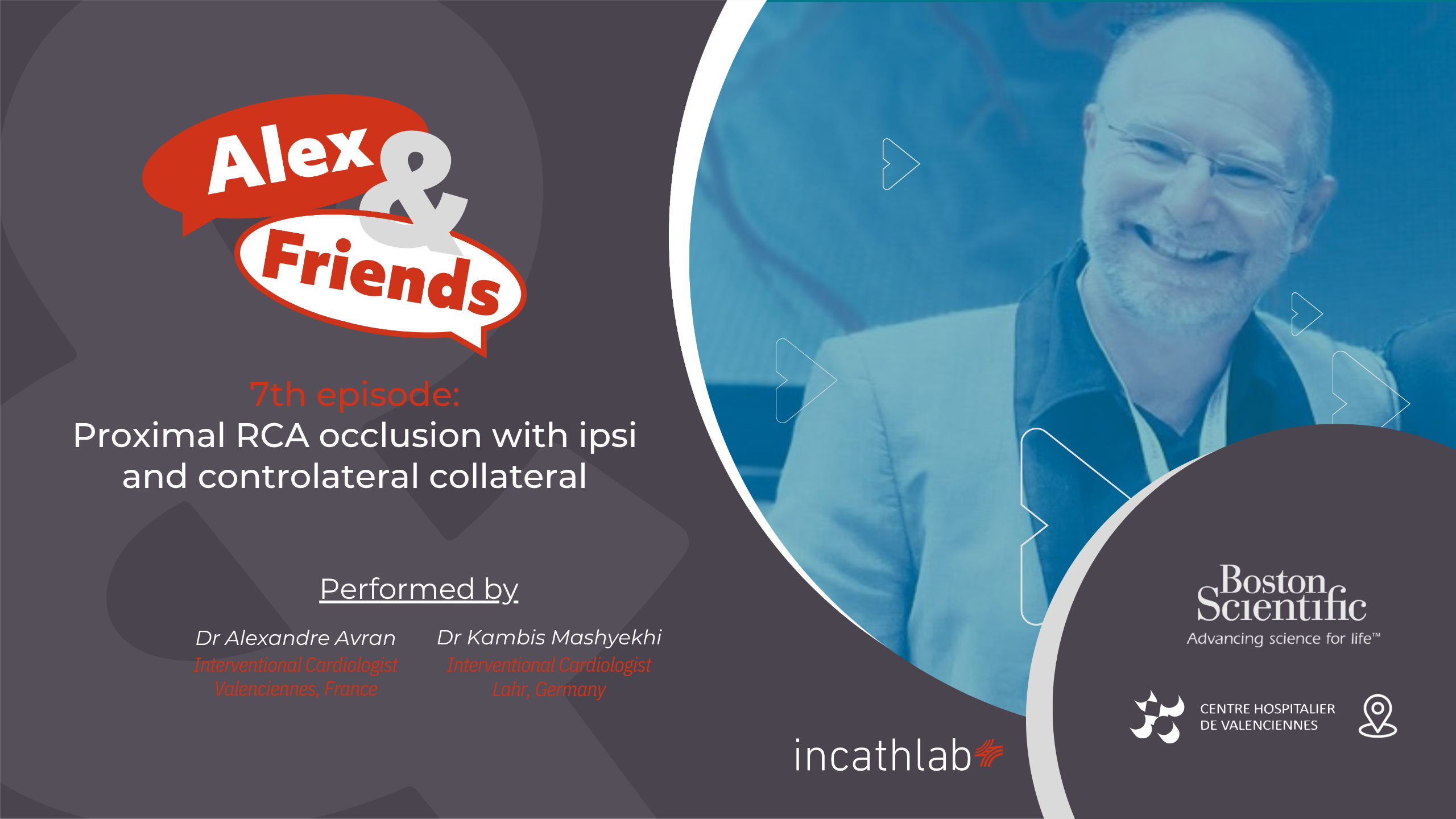
Proximal RCA occlusion with ipsi and controlateral collateral
Alex & Friends - Ep.7
Partager