×
Il semble que vous utilisiez une version obsolète de internet explorer. Internet explorer n'est plus supporté par Microsoft depuis fin 2015. Nous vous invitons à utiliser un navigateur plus récent tel que Firefox, Google Chrome ou Microsoft Edge.
My Player placeholder

Devenez membre d'Incathlab et bénéficiez d'un accès complet !

Vous devez être membre pour accéder aux vidéos Incathlab sans limitation. Inscrivez vous gratuitement en moins d'une minute et accédez à tous les services Incathlab ! Vous avez aussi la possibilité de vous connecter directement avec votre compte facebook ou twitter en cliquant sur login en haut à droite du site.
Inscription Connexion
Inscription Connexion

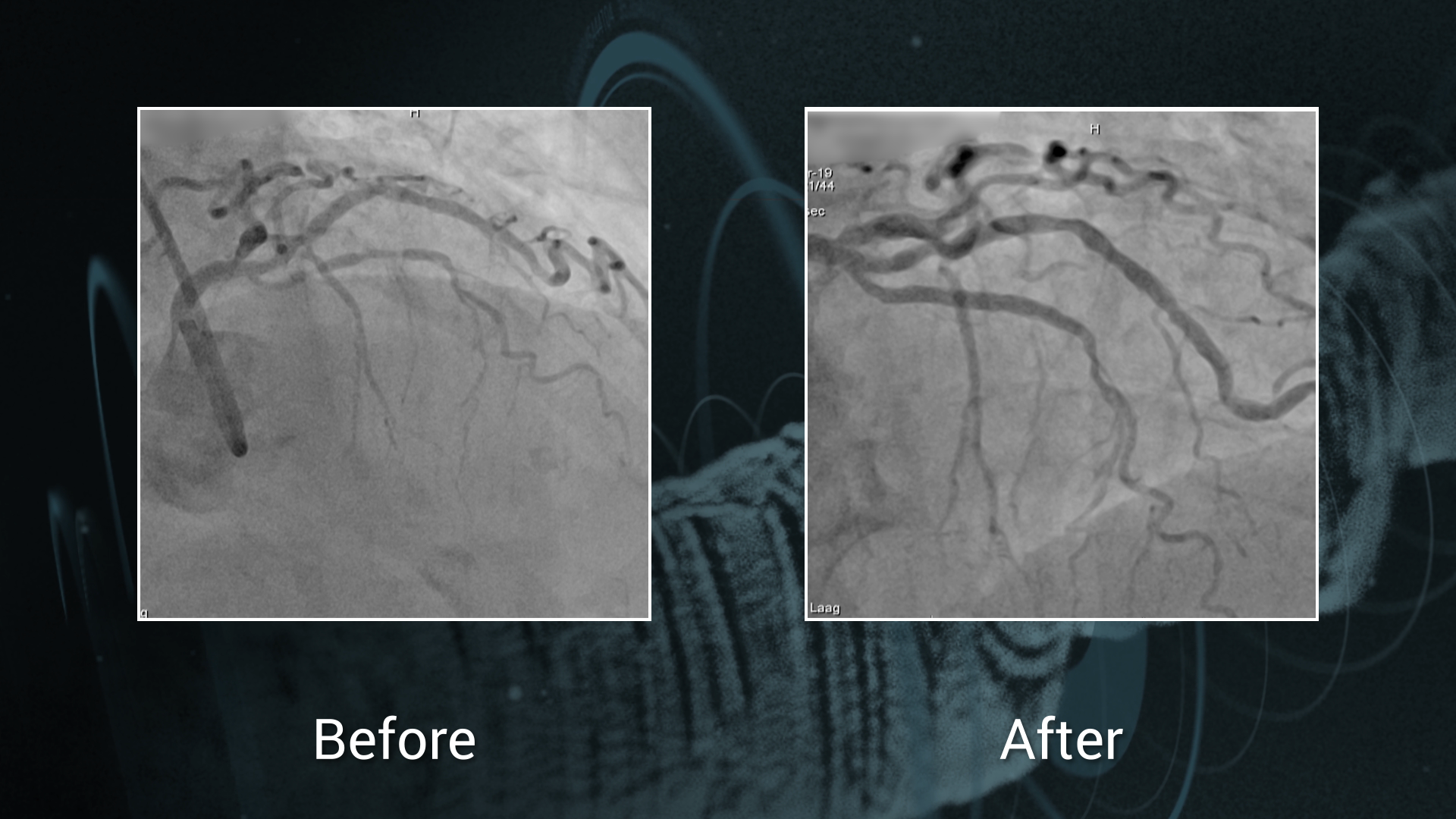
This case describes the treatment of a CTO to LAD.
Protocol
- Procedure time: 75 min
- Exposure time: 25 min
- Exposure: 802,20 mGy
- Contrast volume: 110 ml visipaque 350
Objectives: to learn
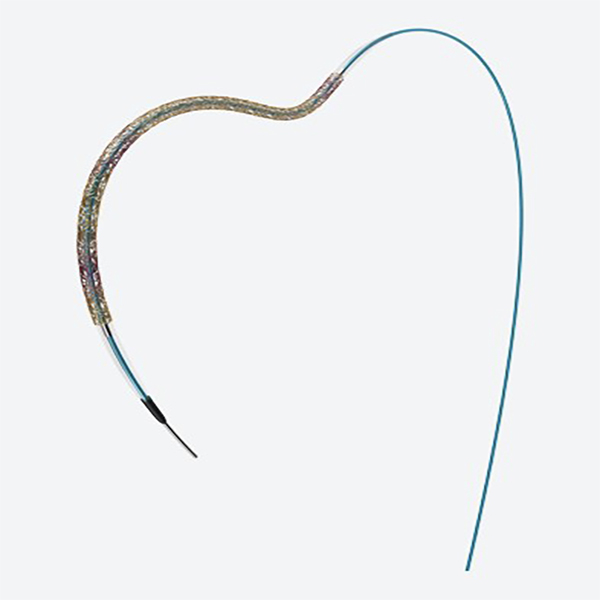
- how to use ultra thin struts stent
- how to antegradely approach a CTO lesion
- how to use a trapper
-IVUS use in CTO
Date du tournage : 10/04/2019
Dernière mise à jour : 04/03/2020
Dernière mise à jour : 04/03/2020




Participer à la discussion
Suggestions

Jeudi 30 mai 2024 de 07h30 à 22h30 (GMT+2)
Honolulu : Mercredi 29 mai 2024 de 19h30 à 10h30 (GMT+2)
San Francisco : Mercredi 29 mai 2024 de 22h30 à 13h30 (GMT+2)
New York : Jeudi 30 mai 2024 de 01h30 à 16h30 (GMT+2)
Buenos Aires : Jeudi 30 mai 2024 de 02h30 à 17h30 (GMT+2)
Reykjavik : Jeudi 30 mai 2024 de 05h30 à 20h30 (GMT+2)
London / Dublin : Jeudi 30 mai 2024 de 06h30 à 21h30 (GMT+2)
Paris / Berlin : Jeudi 30 mai 2024 de 07h30 à 22h30 (GMT+2)
Istanbul : Jeudi 30 mai 2024 de 08h30 à 23h30 (GMT+2)
Moscou / Dubaï : Jeudi 30 mai 2024 de 09h30 à 00h30 (GMT+2)
Bangkok : Jeudi 30 mai 2024 de 12h30 à 03h30 (GMT+2)
Shanghai : Jeudi 30 mai 2024 de 13h30 à 04h30 (GMT+2)
Tokyo : Jeudi 30 mai 2024 de 14h30 à 05h30 (GMT+2)
Sydney : Jeudi 30 mai 2024 de 16h30 à 07h30 (GMT+2)
Wellington : Jeudi 30 mai 2024 de 18h30 à 09h30 (GMT+2)
San Francisco : Mercredi 29 mai 2024 de 22h30 à 13h30 (GMT+2)
New York : Jeudi 30 mai 2024 de 01h30 à 16h30 (GMT+2)
Buenos Aires : Jeudi 30 mai 2024 de 02h30 à 17h30 (GMT+2)
Reykjavik : Jeudi 30 mai 2024 de 05h30 à 20h30 (GMT+2)
London / Dublin : Jeudi 30 mai 2024 de 06h30 à 21h30 (GMT+2)
Paris / Berlin : Jeudi 30 mai 2024 de 07h30 à 22h30 (GMT+2)
Istanbul : Jeudi 30 mai 2024 de 08h30 à 23h30 (GMT+2)
Moscou / Dubaï : Jeudi 30 mai 2024 de 09h30 à 00h30 (GMT+2)
Bangkok : Jeudi 30 mai 2024 de 12h30 à 03h30 (GMT+2)
Shanghai : Jeudi 30 mai 2024 de 13h30 à 04h30 (GMT+2)
Tokyo : Jeudi 30 mai 2024 de 14h30 à 05h30 (GMT+2)
Sydney : Jeudi 30 mai 2024 de 16h30 à 07h30 (GMT+2)
Wellington : Jeudi 30 mai 2024 de 18h30 à 09h30 (GMT+2)
CTO LIVE AID 2024
5th edition
Partager

Mercredi 18 septembre 2024 de 12h à 13h (GMT+2)
Honolulu : Mercredi 18 septembre 2024 de 00h à 01h (GMT+2)
San Francisco : Mercredi 18 septembre 2024 de 03h à 04h (GMT+2)
New York : Mercredi 18 septembre 2024 de 06h à 07h (GMT+2)
Buenos Aires : Mercredi 18 septembre 2024 de 07h à 08h (GMT+2)
Reykjavik : Mercredi 18 septembre 2024 de 10h à 11h (GMT+2)
London / Dublin : Mercredi 18 septembre 2024 de 11h à 12h (GMT+2)
Paris / Berlin : Mercredi 18 septembre 2024 de 12h à 13h (GMT+2)
Istanbul : Mercredi 18 septembre 2024 de 13h à 14h (GMT+2)
Moscou / Dubaï : Mercredi 18 septembre 2024 de 14h à 15h (GMT+2)
Bangkok : Mercredi 18 septembre 2024 de 17h à 18h (GMT+2)
Shanghai : Mercredi 18 septembre 2024 de 18h à 19h (GMT+2)
Tokyo : Mercredi 18 septembre 2024 de 19h à 20h (GMT+2)
Sydney : Mercredi 18 septembre 2024 de 21h à 22h (GMT+2)
Wellington : Mercredi 18 septembre 2024 de 23h à 00h (GMT+2)
San Francisco : Mercredi 18 septembre 2024 de 03h à 04h (GMT+2)
New York : Mercredi 18 septembre 2024 de 06h à 07h (GMT+2)
Buenos Aires : Mercredi 18 septembre 2024 de 07h à 08h (GMT+2)
Reykjavik : Mercredi 18 septembre 2024 de 10h à 11h (GMT+2)
London / Dublin : Mercredi 18 septembre 2024 de 11h à 12h (GMT+2)
Paris / Berlin : Mercredi 18 septembre 2024 de 12h à 13h (GMT+2)
Istanbul : Mercredi 18 septembre 2024 de 13h à 14h (GMT+2)
Moscou / Dubaï : Mercredi 18 septembre 2024 de 14h à 15h (GMT+2)
Bangkok : Mercredi 18 septembre 2024 de 17h à 18h (GMT+2)
Shanghai : Mercredi 18 septembre 2024 de 18h à 19h (GMT+2)
Tokyo : Mercredi 18 septembre 2024 de 19h à 20h (GMT+2)
Sydney : Mercredi 18 septembre 2024 de 21h à 22h (GMT+2)
Wellington : Mercredi 18 septembre 2024 de 23h à 00h (GMT+2)
Can PCI outcomes get any better?
Advancing the standard of care with bioadaptor
Partager


Samedi 8 novembre 2025 de 13h30 à 14h15 (GMT+1)
Honolulu : Samedi 8 novembre 2025 de 01h30 à 02h15 (GMT+1)
San Francisco : Samedi 8 novembre 2025 de 03h30 à 04h15 (GMT+1)
New York : Samedi 8 novembre 2025 de 06h30 à 07h15 (GMT+1)
Buenos Aires : Samedi 8 novembre 2025 de 08h30 à 09h15 (GMT+1)
London / Dublin : Samedi 8 novembre 2025 de 11h30 à 12h15 (GMT+1)
Paris / Berlin : Samedi 8 novembre 2025 de 12h30 à 13h15 (GMT+1)
Istanbul : Samedi 8 novembre 2025 de 13h30 à 14h15 (GMT+1)
Moscou / Dubaï : Samedi 8 novembre 2025 de 15h30 à 16h15 (GMT+1)
Bangkok : Samedi 8 novembre 2025 de 18h30 à 19h15 (GMT+1)
Shanghai : Samedi 8 novembre 2025 de 19h30 à 20h15 (GMT+1)
Tokyo : Samedi 8 novembre 2025 de 20h30 à 21h15 (GMT+1)
Sydney : Samedi 8 novembre 2025 de 21h30 à 22h15 (GMT+1)
Wellington : Samedi 8 novembre 2025 de 23h30 à 00h15 (GMT+1)
San Francisco : Samedi 8 novembre 2025 de 03h30 à 04h15 (GMT+1)
New York : Samedi 8 novembre 2025 de 06h30 à 07h15 (GMT+1)
Buenos Aires : Samedi 8 novembre 2025 de 08h30 à 09h15 (GMT+1)
London / Dublin : Samedi 8 novembre 2025 de 11h30 à 12h15 (GMT+1)
Paris / Berlin : Samedi 8 novembre 2025 de 12h30 à 13h15 (GMT+1)
Istanbul : Samedi 8 novembre 2025 de 13h30 à 14h15 (GMT+1)
Moscou / Dubaï : Samedi 8 novembre 2025 de 15h30 à 16h15 (GMT+1)
Bangkok : Samedi 8 novembre 2025 de 18h30 à 19h15 (GMT+1)
Shanghai : Samedi 8 novembre 2025 de 19h30 à 20h15 (GMT+1)
Tokyo : Samedi 8 novembre 2025 de 20h30 à 21h15 (GMT+1)
Sydney : Samedi 8 novembre 2025 de 21h30 à 22h15 (GMT+1)
Wellington : Samedi 8 novembre 2025 de 23h30 à 00h15 (GMT+1)
SELUTION DeNovo 1-year data – New data = New perspectives?
What do the SELUTION DeNovo 1-year results mean for clinical practice in Germany?
Partager
Jeudi 11 avril 2019 de 12h30 à 14h (GMT+2)
Honolulu : Jeudi 11 avril 2019 de 00h30 à 02h (GMT+2)
San Francisco : Jeudi 11 avril 2019 de 03h30 à 05h (GMT+2)
New York : Jeudi 11 avril 2019 de 06h30 à 08h (GMT+2)
Buenos Aires : Jeudi 11 avril 2019 de 07h30 à 09h (GMT+2)
Reykjavik : Jeudi 11 avril 2019 de 10h30 à 12h (GMT+2)
London / Dublin : Jeudi 11 avril 2019 de 11h30 à 13h (GMT+2)
Paris / Berlin : Jeudi 11 avril 2019 de 12h30 à 14h (GMT+2)
Istanbul : Jeudi 11 avril 2019 de 13h30 à 15h (GMT+2)
Moscou / Dubaï : Jeudi 11 avril 2019 de 14h30 à 16h (GMT+2)
Bangkok : Jeudi 11 avril 2019 de 17h30 à 19h (GMT+2)
Shanghai : Jeudi 11 avril 2019 de 18h30 à 20h (GMT+2)
Tokyo : Jeudi 11 avril 2019 de 19h30 à 21h (GMT+2)
Sydney : Jeudi 11 avril 2019 de 21h30 à 23h (GMT+2)
Wellington : Jeudi 11 avril 2019 de 23h30 à 01h (GMT+2)
San Francisco : Jeudi 11 avril 2019 de 03h30 à 05h (GMT+2)
New York : Jeudi 11 avril 2019 de 06h30 à 08h (GMT+2)
Buenos Aires : Jeudi 11 avril 2019 de 07h30 à 09h (GMT+2)
Reykjavik : Jeudi 11 avril 2019 de 10h30 à 12h (GMT+2)
London / Dublin : Jeudi 11 avril 2019 de 11h30 à 13h (GMT+2)
Paris / Berlin : Jeudi 11 avril 2019 de 12h30 à 14h (GMT+2)
Istanbul : Jeudi 11 avril 2019 de 13h30 à 15h (GMT+2)
Moscou / Dubaï : Jeudi 11 avril 2019 de 14h30 à 16h (GMT+2)
Bangkok : Jeudi 11 avril 2019 de 17h30 à 19h (GMT+2)
Shanghai : Jeudi 11 avril 2019 de 18h30 à 20h (GMT+2)
Tokyo : Jeudi 11 avril 2019 de 19h30 à 21h (GMT+2)
Sydney : Jeudi 11 avril 2019 de 21h30 à 23h (GMT+2)
Wellington : Jeudi 11 avril 2019 de 23h30 à 01h (GMT+2)
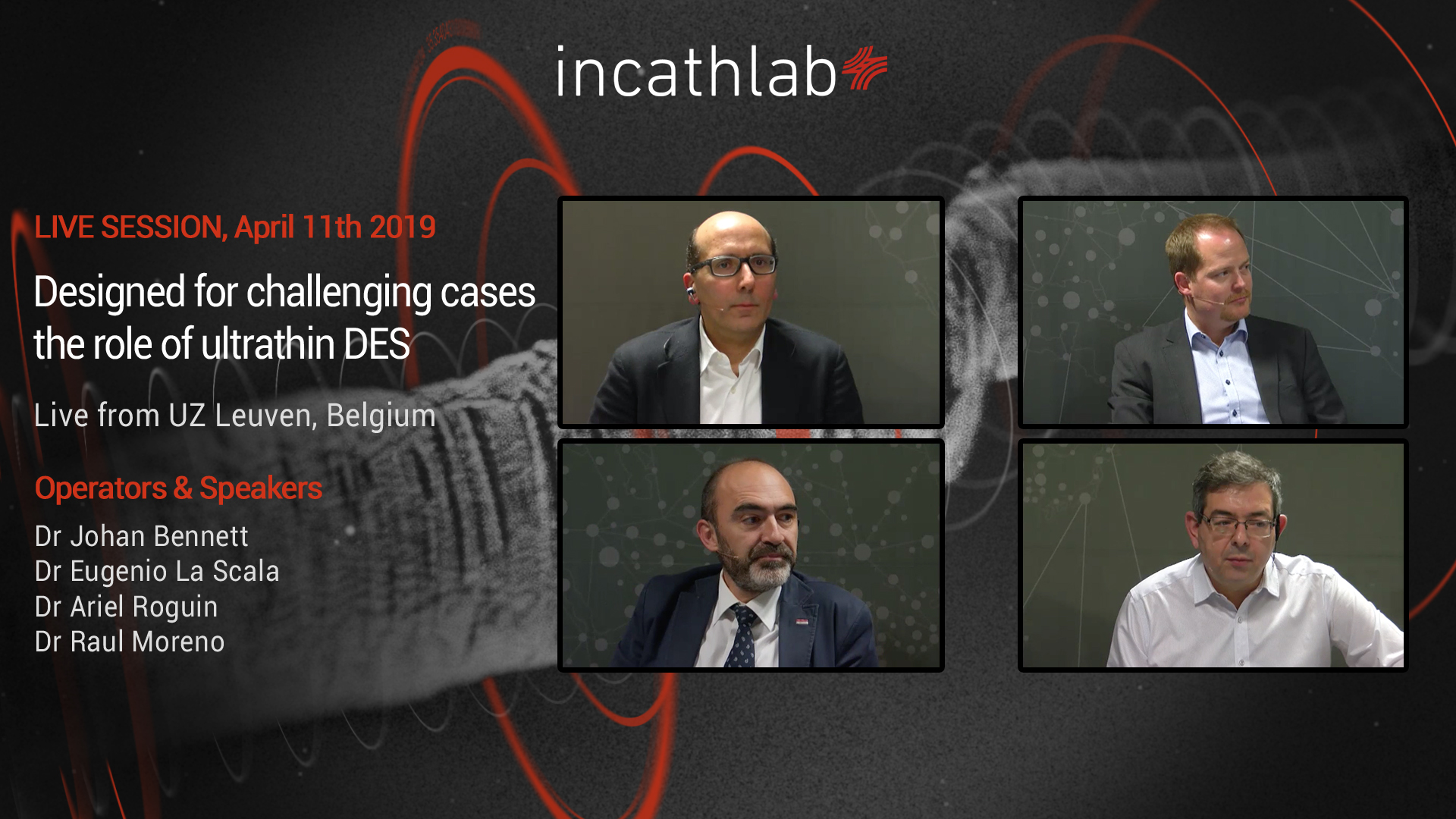
Designed for challenging cases - the role of ultrathin DES
Live from UZ Leuven, Belgium
Partager

Severe tortuous RCA and calcified LAD
Dr Johan Bennett, Dr. Ariel Roguin & Dr Eugenio La Scala
Partager
Complex PCI made easy by physiology
Dr Johan Bennett, Dr. Ariel Roguin, Dr Eugenio La Scala & Dr Keir McCutcheon
Partager
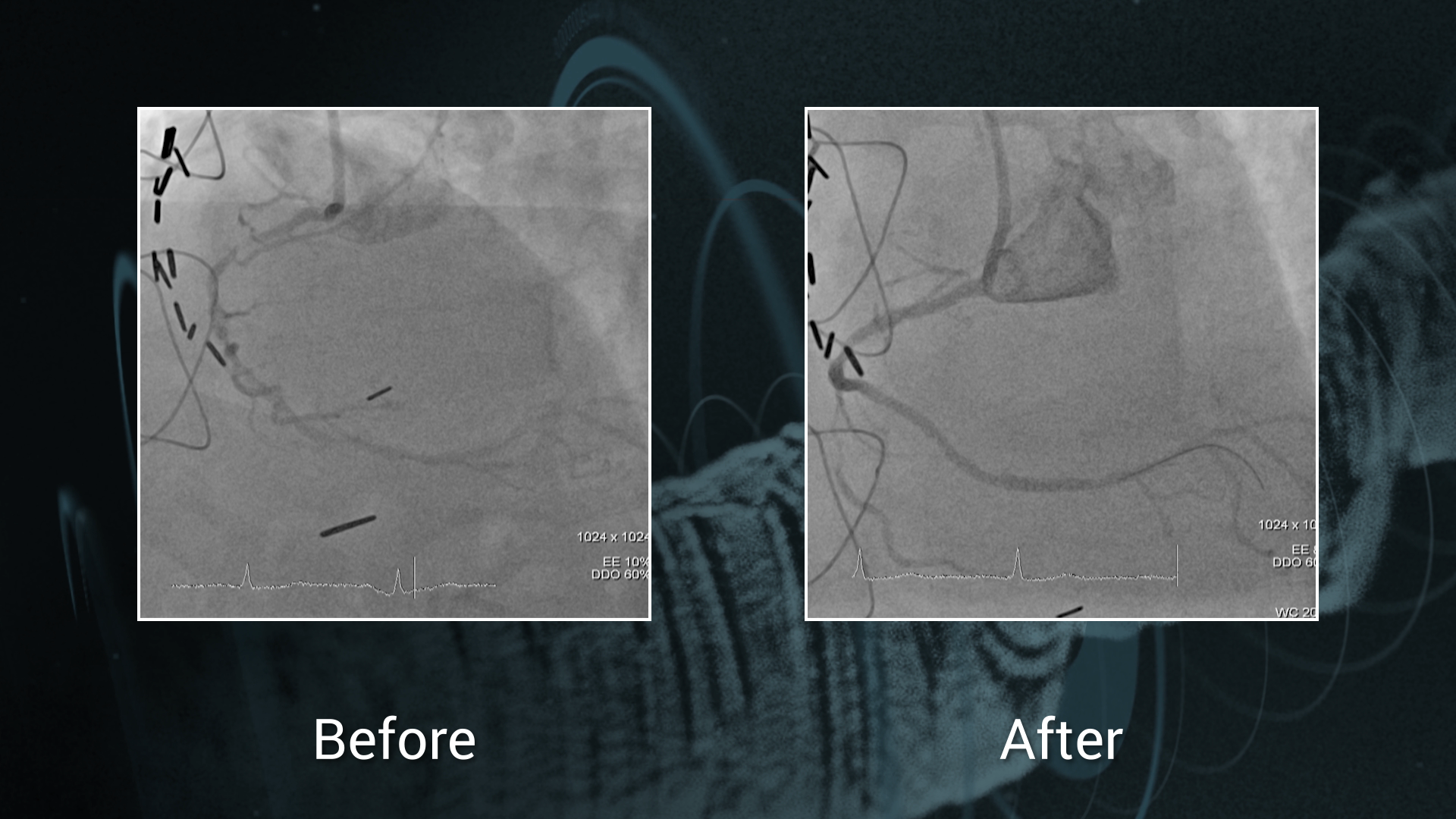
Multivessel PCI (calcified prox RCA and prox LAD lesions)
Dr Johan Bennett & Dr Eugenio La Scala
Partager
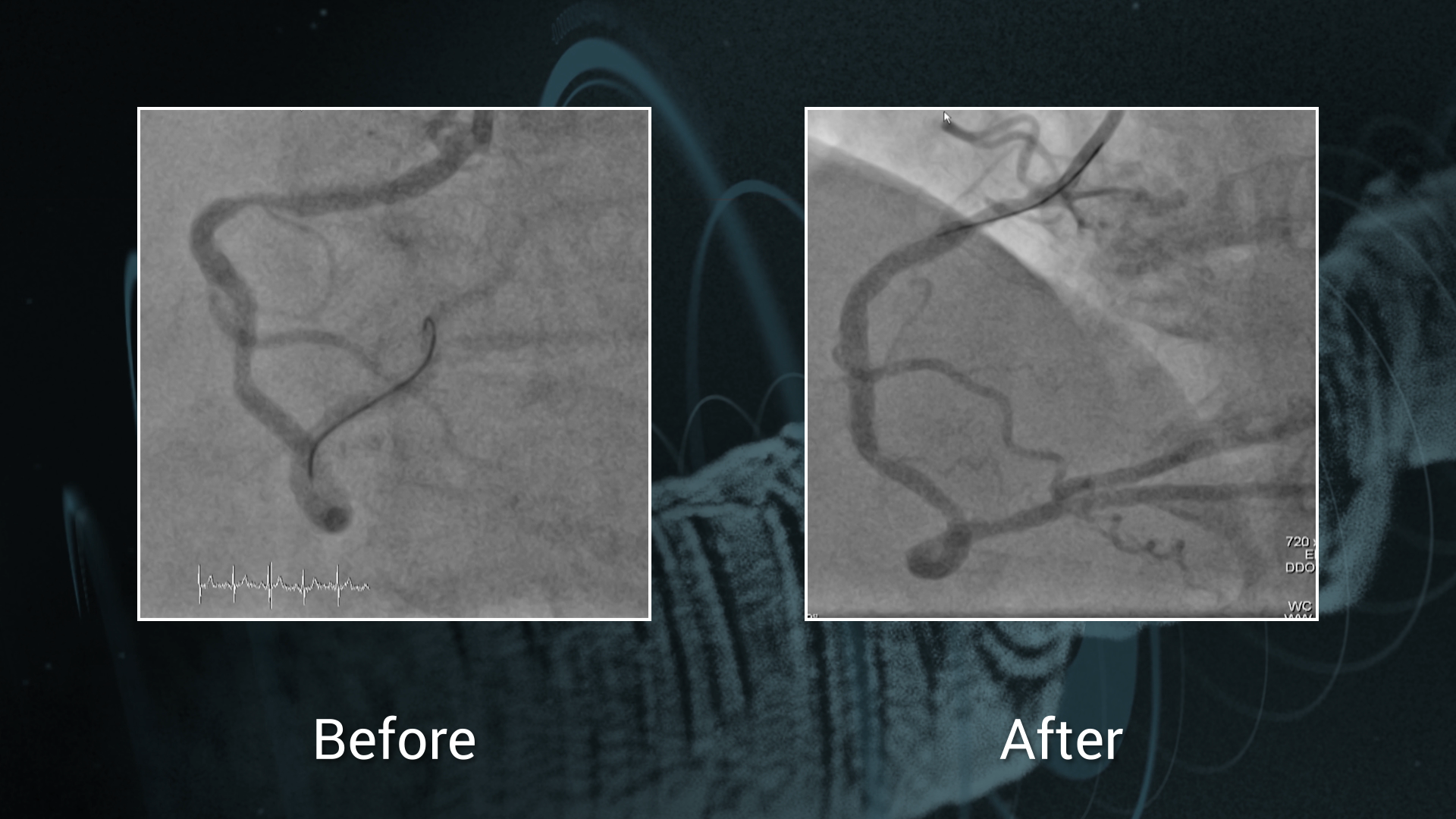

Functional guided percutaneous revascularization (Lcx and LAD)
Dr Johan Bennett & Dr Ariel Roguin
Partager
A. congratulations. the flow of LAD is quite good but there is serious stenosis at the ostium of the Diagonal branch. It is an important branch. therefore it is not appropriate to leave the patient in this way in terms of complete revascularization of the patient. I would open the side branch.
Hassaan A. I think there is data that supports that if there is TIMI 3 flow in the Diagonal branch its best to leave it alone
Tekten T.